





How to Talk to Kids About Feelings (Even When They Don’t Want To)

“I Just Want to Know What’s Going On Inside Their Head”
You want to support your child, but when they don’t open up, it’s hard to know where to start. If you’ve ever felt helpless trying to understand your child’s emotions, you’re not alone.
Bethany Nold, LCPC, Camber Program Development Coordinator, shares simple, supportive ways to ask better questions, model emotional language and create connection.
Before diving into strategies, it’s helpful to start with moments that feel natural, not forced. That’s where bedtime can become one of your best opportunities.
Why Bedtime Is a Secret Superpower for Connection
When a child is snuggled into bed, the pressure of the day has passed. That physical comfort can become emotional comfort, too. This is when children are more likely to open up, reflect and express feelings they may have suppressed throughout the day. It’s not about solving every challenge, but about holding space and allowing them time to decompress and think.
Instead of using bedtime to remind your child about what went wrong that day, try:
- “What was the best part of your day?”
- “Anything still on your mind tonight?”
- “Is there something you’d like to dream about tonight?”
“Bedtime is naturally low-stress. Kids are winding down, routines are kicking in and the environment is calm. That combo makes it the perfect time for emotional check-ins.“ — Bethany Nold, LCPC
How to Get Past One-Word Answers (Without Forcing It)
If you get stuck in the yes/no zone, don’t push. Instead, shift the vibe. It’s not about forcing a response. It’s about gently creating the kind of space where your child might feel safe enough to share on their terms.
- Use open-ended questions like: “What was the most surprising part of your day?”
- Try side-by-side moments—folding laundry, drawing, cooking—to make conversations feel less intense.
- Embrace silence. When silence isn’t rushed, it signals that you’re not expecting quick or “right” answers, just honesty.
“You can have a meaningful interaction without filling every space with words,” says Bethany Nold, LCPC. Sometimes short answers mean your child is tired, unsure how to describe what they’re feeling, or testing to see how you’ll respond. That doesn’t mean they don’t want to talk, it might mean they need more time or a different approach.
Let the conversation lead. When you’re open, they might be too.
Pro tip: Avoid coming in with an agenda. Let the convo go where it needs to go.
Trust is Built in the Response, Not the Question
Your reaction is everything. “If your child finally opens up and you immediately problem-solve, they might shut down again,” says Bethany. Think of listening like holding a door open. The longer you hold it, the more welcome they feel to walk through.
When kids share something vulnerable, they’re gauging whether it’s safe to keep going. Jumping in with solutions or minimizing how they feel (even unintentionally) can signal that their emotions aren’t valid.
Instead:
- Ask: “Do you want help or just someone to listen?”
- Validate their emotions first: “That does sound really frustrating.”
- Reflect what you hear: “You were proud of your project, but upset no one noticed. That makes sense.”
This kind of reflection tells your child: “I see you. I hear you. I get it.”
What Not to Do
Even with the best intentions, it’s easy to miss the mark. Here’s a cheat sheet:
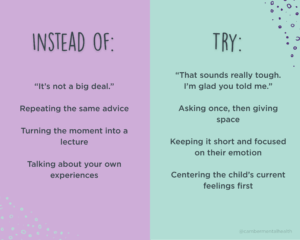
Many caregivers share their own story to show empathy, but it can sometimes feel like comparison. Focus on listening, and save your personal stories for when your child is ready for them.
Prompts That Actually Work
Now that you know what to avoid, here are some go-to prompts that feel natural:
- “Can you tell me more about that?”
- “Would it help to talk about it now or later?”
- “Want to make dinner with me and chat while we cook?”
- Use the 1–10 scale: “How are you feeling today? I’m at about a 6.”
Open-ended prompts permit kids to express without pressure. Offering a choice, like whether they want to talk now or later, gives them a sense of control, which makes it more likely they’ll engage.
When to Check In (Besides Bedtime)
Check-ins don’t always have to be big, serious moments. They can happen while you’re doing something else, just as long as you’re not distracted by screens or multitasking. “Avoid trying to talk during distractions—like when you’re on your phone or watching TV,” Bethany Nold, LCPC, advises. “Look for privacy and presence.”
- In the car, no phones: A drive to school or practice can be the perfect in-between moment for a casual, low-pressure check-in. The lack of eye contact makes it feel less intense.
- While cooking or baking together: Stirring a sauce, kneading dough, or setting the table provides natural opportunities to talk while your hands are busy.
- Walking the dog or doing a shared chore: Physical movement can reduce tension. A walk or even folding laundry side by side can invite conversation in a relaxed way.
Looking for an easy way to bring this to life?
Download our printable conversation card set with 12 calming, creative prompts you can use at bedtime or any quiet moment. Just cut them out, place them in a jar or envelope, and let your child choose when they’re ready to share.

These Tools Work Beyond Childhood: Emotional Support Has No Age Limit
Kids aren’t the only ones who struggle to talk about feelings. Teens pull away. Adults shut down. Even partners can get quiet. These strategies, open-ended questions, space and presence work for all of them.
The next time a friend or loved one seems off but doesn’t know how to open up, try saying:
- “You don’t have to explain everything. I’m here when you’re ready.”
- “Do you want to talk, or would it feel better to just hang out together for a bit?”
- “I’ve had moments like that, too. I won’t pretend to know exactly how you feel, but I care.”
Sometimes the most supportive thing we can offer is presence without pressure.
Signs They May Need More Support
 Sometimes the behavior is communication. Trust your gut. If your child seems to be acting differently, maybe they start avoiding family time, become more irritable or keep circling back to a certain topic but never quite talk it through, it might be time to talk with a professional. These subtle patterns can be signals that they’re carrying more than they can express. Emotional regulation is a skill, and just like any other, some kids need extra support learning it.
Red flags include:
- Frequent worry or irritability
- Saying “I don’t care” or “I don’t feel anything”
- Withdrawing or isolating
- Big emotions over small things
Final Tips to Keep It Natural
Let connection lead. Not every talk will be deep, but every moment of emotional safety matters. “There’s an inherent power difference between parent and child, but approaching the conversation as two people with valid emotions can shift the dynamic in a really positive way.”
A few final tips to help keep the conversation natural and engaging:
- Make the conversation mutual: “I had a hard day, too. Want to talk while we unwind?”
- Keep it short. You don’t need to solve everything in one night.
- Don’t repeat yourself. Let things sink in with space and quiet.
The Bottom Line
You don’t need a script. You need a rhythm.
Let emotional check-ins become part of your family’s weekly flow, a quiet bedtime moment, a walk or a car ride. And if your child doesn’t open up right away, that’s okay. Showing up consistently matters more than saying the perfect thing.
Looking for More Real-World Support? Explore These Related Posts:
- 10 Therapist-Approved Boundary Phrases to help you hold space for yourself and others
- LGBTQ+ Mental Health Needs for insight on how identity and emotions connect
- 15 Books That Help Kids, Teens and Adults Understand Mental Health and Healing, if you’re worried conversations might not be enough